
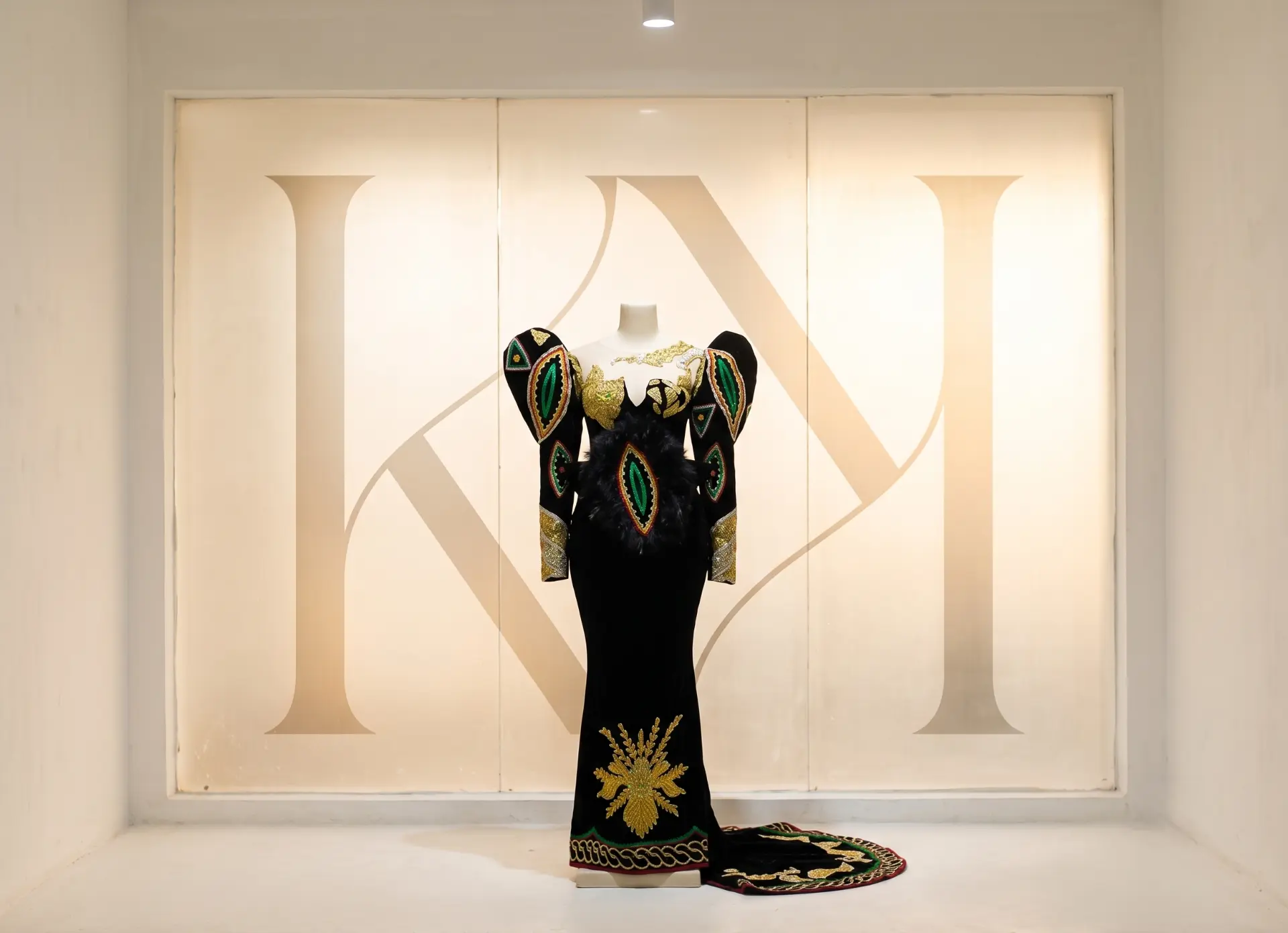
An African house that is not asking for a seat at the table.
A fashion editor said this about Kolo two seasons ago, and it has followed us since, kindly, through every conversation with press. It was meant as a compliment and we take it as one, but it is worth examining what it assumes. The table in question is set in Paris, in Milan, in the rooms where the gatekeepers of couture have sat for a century. The assumption is that the natural trajectory of an African house is toward those rooms: to be admitted, endorsed, seated.
Kolo was founded in Douala, and Douala is not a waiting room. The house cuts in the lineage of the master tailors of West Africa, men and women who clothed their cities in garments as disciplined as anything cut in Europe, and who never needed a foreign committee to say so. When a Kolo gown is photographed beside a Parisian one, the comparison that matters is not which house is older. It is which garment is more honestly made.
What the press noticed
The pieces that travel best are, fittingly, the pieces that took longest. The Vitrine, a black gown embroidered in green and gold, has been photographed more than any garment we have made, and it is, by the embroiderers’ own account, the most stubborn: eleven weeks, two restarts, a thread that kept refusing the curve until the curve was redrawn to meet the thread. The pictures do not show any of that. But the women who ask about the gown sense it. Honesty of construction reads at any resolution.
The archive grows either way
We keep every clipping, of course. An archive is a house’s memory. But the instruction we give ourselves each season is older than any of it: make the garment so particular that it cannot be mistaken for a trend, and let the writing follow or not. A seat at someone else’s table is furniture. A gown that holds a room is architecture.